
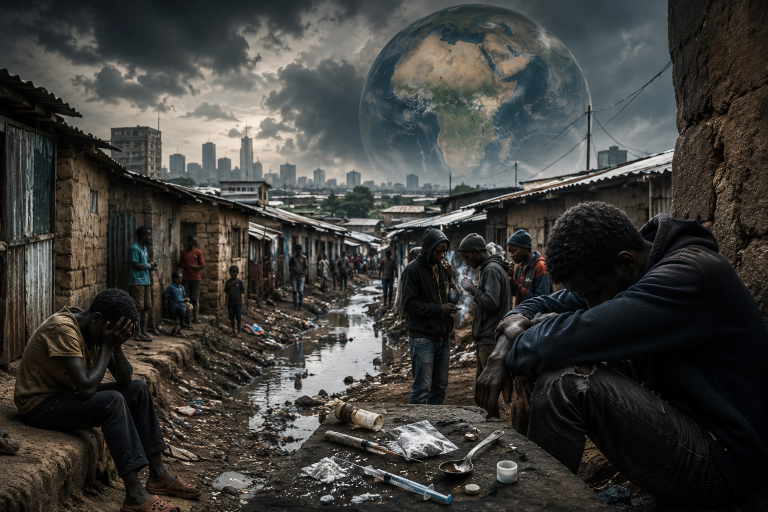
In 2018, an estimated 269 million people between the ages of 15 and 64 worldwide had used illicit substances at least once. This means that hundreds of millions of people were exposed to substances that are illegal or controlled because of their potential to cause harm, dependence, and social disruption.
The figure is significant because it represents far more than a statistic. Behind every number is an individual, a family, a workplace, and a community potentially affected by substance use. Illicit drug use can range from occasional experimentation to repeated use and, for some people, the development of substance-use disorders and dependence.
The problem also extends beyond the person using the substance. Harmful drug use can contribute to poor physical and mental health, addiction, accidents, violence, family breakdown, unemployment, financial hardship, crime, and reduced productivity. Communities may also experience increased pressure on healthcare, social services, law enforcement, and rehabilitation systems.
Young people are particularly important in addressing this challenge. The period between adolescence and early adulthood is often when experimentation with alcohol, tobacco, and other substances begins. Early exposure can increase the risk of developing problematic patterns of use later in life.
It is also important to recognize that not everyone who uses an illicit substance becomes dependent or develops a substance-use disorder. However, the sheer number of people exposed to illicit substances demonstrates the enormous scale of the global challenge and the need for effective prevention, education, early intervention, treatment, rehabilitation, and reintegration into society.
Why this matters
269 million people is more than a number. It represents a global public-health and social challenge that requires coordinated action from governments, healthcare professionals, schools, families, communities, civil-society organizations, and individuals.
The goal should not only be to prevent drug use, but also to ensure that people who develop substance-use disorders can access evidence-based treatment, recovery support, and opportunities to rebuild their lives without stigma or discrimination.
The global drug problem is ultimately a human problem. Behind every statistic is a person whose choices, health, relationships, opportunities, and future may be affected.
